
The apparel decoration sector is experiencing a permanent migration toward the high-definition potential of dtf, yet many operators remain stuck in a “manual craft” mindset. To build a brand that resonates in the competitive retail space, you must pivot from being a “print provider” to a “garment systems engineer.” In this new era, your success is not determined by the artistic complexity of your designs, but by the mechanical reliability of your production floor.
A retail-ready garment is not just a carrier for your brand’s logo; it is a high-performance, wearable product that must withstand thousands of hours of mechanical stress. When you apply dtf transfers, you are initiating a sophisticated bond between an engineered polymer and a textile fiber. If you aren’t managing that bond with empirical, data-backed protocols, you are essentially gambling with your brand’s reputation. At Harwin, we view apparel manufacturing as an exercise in “process control.”
The Technical Blueprint: Governing the Variables
To reach elite levels of production, you must eliminate the “randomness” that leads to product returns. Scalable apparel brands govern their production through a system of strict technical benchmarks:
- Atmospheric Normalization: TPU adhesive is a hygroscopic material. If your workspace lacks strict humidity control, your powder is absorbing moisture from the air, creating microscopic “pitting” defects during the curing stage.
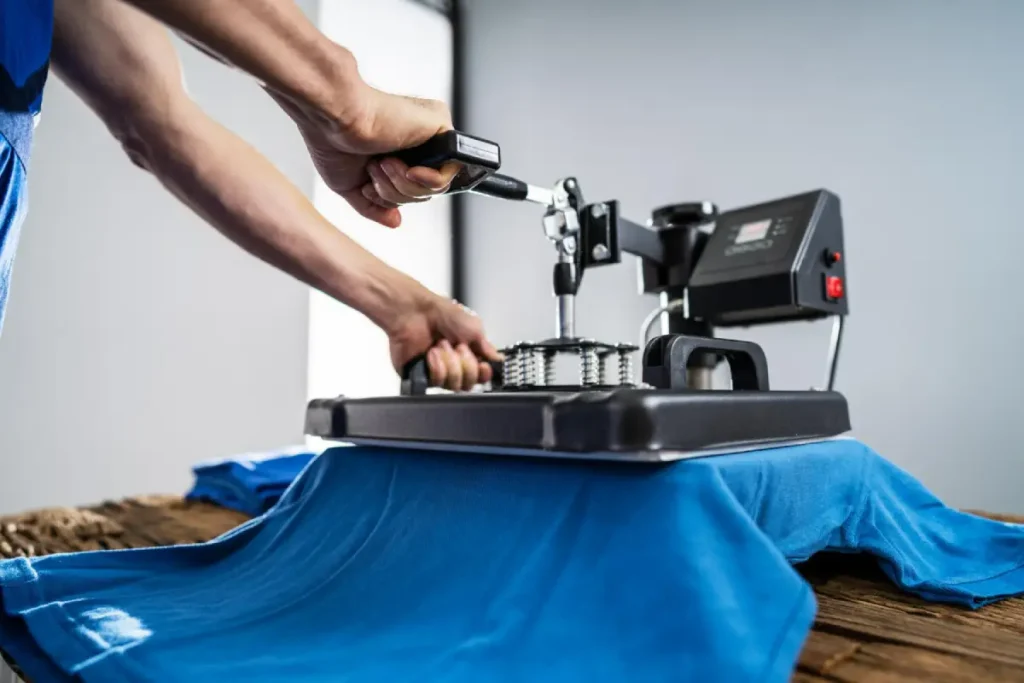
- Mechanical Force Standardization: Adhesion is 60% heat and 40% pressure. Using a press with a digital pressure gauge allows you to define a “Force Profile” for every fabric in your shop. Consistency in PSI equals consistency in profit.
- The Dwell-Time Recovery: Most operators fail to account for the “temperature dip” when a room-temperature garment hits the platen. Your dwell-time must start *after* the press recovers to its target temperature to ensure the adhesive reaches its true melting point.
Agile Manufacturing: The Lean Supply Chain
Traditional inventory management is the quickest way to drain your brand’s growth potential. By tying up your cash in stacks of pre-printed stock, you lose the ability to iterate based on actual consumer demand. Searching for dtf transfers near me is the most practical step toward a “Just-in-Time” (JIT) production model. By partnering with a technically sophisticated regional printer, you move from a high-risk model to an on-demand manufacturing system.
This localized partnership is more than a logistics solution; it is an R&D asset. Whether you need to iterate on “low-temp” adhesives for synthetic blends or test high-end matte additives for a luxury drop, your regional partner provides the technical support to make it happen without the overhead of massive printing hardware. This “Asset-Light” strategy keeps your capital fluid and allows you to pivot your design catalog in response to weekly sales trends.
Establishing Technical Authority
Scalability dies where guesswork lives. To build a company that functions without your constant oversight, you must codify your knowledge into a **Production Logic Ledger**. This document should be your shop’s “Source of Truth,” containing the exact temperature, PSI, and dwell-time requirements for every SKU in your catalog. When your production standards are documented, your volume can scale without a degradation in product performance.
Furthermore, internal durability testing is your most effective marketing asset. By subjecting your production samples to “Accelerated Wear Audits”—industrial-grade, high-heat laundry cycles—you gain the empirical data needed to back your quality claims. When you can present your retail partners with a “wash-tested” durability report, you fundamentally alter the sales conversation. You are no longer selling a graphic on a shirt; you are selling a tested, durable asset that is guaranteed to perform.
Frequently Asked Questions
Why does “pre-pressing” make a measurable difference in durability?
Pre-pressing is a moisture-evacuation technique. Residual humidity in textile fibers turns into steam instantly upon contact with a 300°F heat press. This steam creates a physical gap that prevents the adhesive from ever touching the textile fibers, ensuring a weak, surface-level bond.
How do I differentiate high-end transfers from mass-market ones?
Look for “Elastic Memory.” A premium transfer will stretch and retract alongside the textile without creating white stress marks or micro-cracks. If a print shows “whitening” after one stretch, the adhesive chemistry is likely too rigid for long-term wear.
Is DTF better for high-end synthetic sportswear?
It is the superior choice, provided you use the correct chemistry. Synthetic fibers are heat-sensitive. Always use “low-melt” adhesive powders and perform a thermal gradient test to find the minimum temperature required to achieve a secure bond without damaging the fabric fibers.
What is the most effective way to audit my production output?
Implement the “Stress-to-Failure” protocol. Select one garment from every production batch and run it through a heavy-duty laundry cycle with high-heat drying. If the graphic shows zero degradation after five cycles, your production process is fully calibrated for the premium retail market.
Building a successful, high-quality apparel brand is a journey of continuous technical refinement. By mastering the potential of dtf, you position your brand to compete at the highest level of the custom merchandise market. Harwin is committed to providing the industry insights you need to turn your production floor into a professional, profitable enterprise. Start optimizing your workflow today—your commitment to quality is the most valuable investment you can make for your brand’s future.