
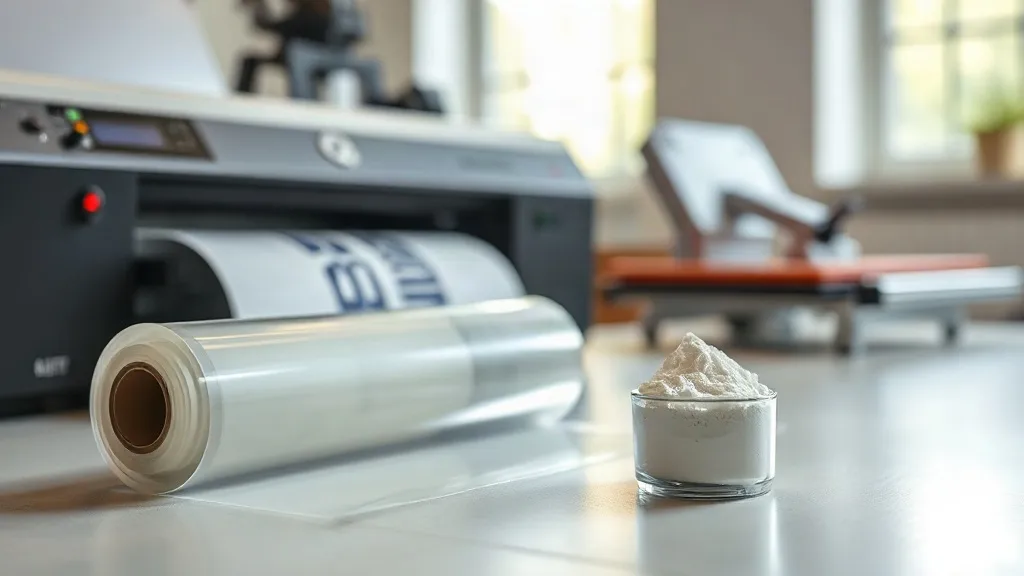
You've probably heard that dtf transfers are forgiving. Compared to screen printing or vinyl, they are. But forgiving doesn't mean foolproof. The two components that cause the most headaches in a small shop are the film and the powder. Choose the wrong film for your printer, or the wrong powder for your fabric, and you'll spend your afternoon peeling, cracking, and reprinting. This guide cuts through the noise and gives you a practical way to match film and powder to your actual workflow, not to a generic recommendation list.
Why Film and Powder Matter More Than You Think
In a DTF setup, the film is the carrier. It holds your printed design until it's transferred to the garment. The powder is the adhesive that bonds the ink to the fabric. If the film doesn't release cleanly, you get patches of missing ink. If the powder doesn't melt and bond properly, you get prints that peel after the first wash. Neither problem is random. Both come down to compatibility.
Most beginners focus on the printer and the ink, then grab whatever film and powder is cheapest. That's a mistake. The film and powder are where the physical bond happens. They deserve the same attention you give to color profiles and print head maintenance.
Understanding DTF Film Types
DTF film comes in two main categories: cold peel and hot peel. The difference sounds minor, but it changes how you handle every transfer.
Cold Peel Film
Cold peel film requires the transfer to cool completely before you remove the carrier sheet. The advantage is that the print has time to set, which can reduce distortion on stretchy fabrics. The downside is speed. If you're producing dozens of shirts, waiting for each one to cool slows you down. Cold peel film is often a better fit for detailed designs or fabrics that are sensitive to heat.
Hot Peel Film
Hot peel film lets you remove the carrier while the transfer is still warm. This speeds up production significantly, which is why many small shops prefer it for high-volume runs. The catch is that you need to peel confidently and consistently. Hesitate, and you risk lifting edges of the design. Hot peel film also tends to work well with standard cotton and cotton blends, making it a versatile choice for everyday orders.
Beyond peel temperature, film thickness matters. Thinner films conform better to textured fabrics and give a softer hand feel. Thicker films are more forgiving during printing and pressing, which can be helpful if you're still dialing in your press settings. If you're new to dtf, start with a mid-weight film and get comfortable with the process before experimenting with ultra-thin options.
Decoding DTF Powder Grades
DTF powder, also called adhesive powder, is typically available in fine, medium, and coarse grades. The grade affects how the powder settles on the wet ink and how it melts during curing.
Fine Powder
Fine powder particles are small, which means they create a smooth, even coating. This is ideal for detailed designs with thin lines and small text. The drawback is that fine powder can become airborne easily, so you need to apply it in a controlled way. A powder shaker with a fine mesh screen helps, and you should always work in a ventilated area.
Medium Powder
Medium powder is the workhorse grade. It offers a good balance between detail and durability, and it's forgiving if your powder application isn't perfectly uniform. For most shops printing on cotton and blends, medium powder is a safe default. It melts predictably and bonds well without requiring extreme press settings.
Coarse Powder
Coarse powder is best for heavy fabrics like canvas or denim, where you need a strong bond and the design is bold rather than delicate. The larger particles create a thicker adhesive layer, which can feel stiffer on the garment. Use coarse powder sparingly and only when the fabric demands it.
Regardless of grade, always shake off excess powder before curing. A common mistake is to apply too much powder, thinking it will make the print more durable. In reality, excess powder leads to a rough texture, incomplete melting, and a higher chance of cracking. A thin, even layer is what you want.
Matching Film and Powder to Your Fabric
The fabric you're printing on should guide your film and powder choices. Here's how to think about common scenarios.
- 100% Cotton: Hot peel film and medium powder work well. Cotton handles heat well, and the bond is reliable. Pre-press the garment to remove moisture, then press at the recommended temperature for your film.
- Cotton/Poly Blends: These fabrics can be sensitive to high heat. Use a slightly lower press temperature and consider cold peel film to avoid scorching. Medium powder is usually fine, but test a small area first.
- 100% Polyester: Polyester can dye-migrate at high temperatures, so lower heat is essential. Cold peel film gives you more control, and fine powder helps avoid a heavy hand feel. Always test for dye migration before committing to a full run.
- Stretch Fabrics: Look for films labeled as stretchable or elastic. These films move with the fabric instead of cracking. Pair them with a flexible powder grade, and avoid over-pressing, which can stiffen the print.
If you're sourcing dtf transfers near me, ask the supplier about their film and powder recommendations for your specific fabric mix. A good supplier will know which combinations work best and can save you from costly trial and error.
Storage and Handling Tips for Film and Powder
Film and powder are sensitive to moisture and temperature. Store film in a cool, dry place, and keep it in its original packaging until you're ready to use it. Humidity can cause the film to curl or the coating to degrade, leading to poor ink adhesion. Powder should be kept in a sealed container. If it clumps, it's absorbed moisture and won't melt evenly. A simple rule: if it doesn't flow freely, don't use it.
When loading film into your printer, handle it by the edges. Oils from your fingers can interfere with ink adhesion and cause spots in the print. Keep a dedicated pair of tweezers or gloves nearby if you're handling film frequently.
Testing Your Combination Before a Big Run
Never commit to a large order without a test print. Print a small design, apply powder, cure, and press it onto a scrap piece of the actual fabric you'll be using. Then wash it. A simple wash test (warm water, mild detergent, no fabric softener) will reveal whether the bond is strong. Check for peeling at the edges, cracking in the center, and any change in texture. If the print survives a wash cycle, you're ready to scale up. If not, adjust one variable at a time: powder amount, press temperature, or film type.
Frequently Asked Questions
Can I use the same film for both cold peel and hot peel?
No. Cold peel and hot peel films are formulated differently. Using a cold peel film as if it were hot peel can cause the design to lift or distort. Always follow the manufacturer's instructions for peel temperature.
How do I know if my powder is still good?
Fresh powder flows freely and doesn't clump. If you squeeze a handful and it stays compacted, it has absorbed moisture. Using damp powder leads to uneven melting and weak bonds, so it's best to replace it.
What's the ideal powder application for fine details?
Use a fine-grade powder and apply it with a shaker that has a fine mesh. Tap off excess gently. You want a thin, even coating that covers the wet ink without building up in the gaps.
Why do my prints feel stiff after using coarse powder?
Coarse powder creates a thicker adhesive layer, which can feel stiff on the garment. For softer prints, switch to fine or medium powder and ensure you're not over-applying. Also check your press pressure; too much pressure can flatten the powder layer and make it feel stiffer.
Do I need different film for light and dark fabrics?
DTF film is typically white and opaque, so it works on both light and dark fabrics. The key is to ensure the white ink layer is thick enough to block the fabric color. If you're printing on dark fabrics, you may need to adjust your white ink settings or use a film that's optimized for opacity.