
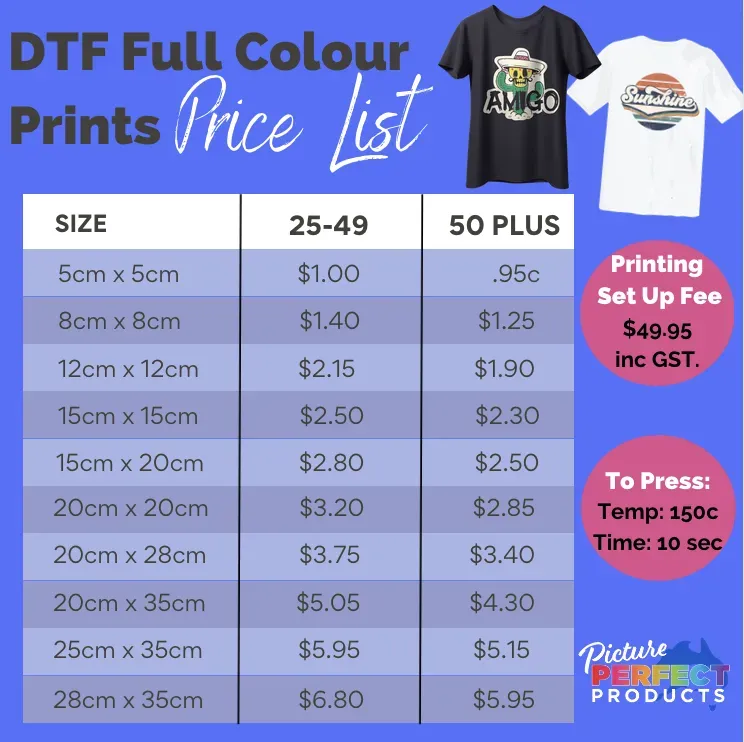
DTF printing cost is a critical consideration for businesses looking to invest in this innovative printing technology. Understanding these costs is essential to evaluating the overall return on investment (ROI) that DTF can offer. The high-quality output paired with cost-effective production makes DTF printing a compelling choice in today’s diverse market. With professional-grade DTF printing equipment, users can achieve vibrant designs efficiently, appealing to a broad range of applications. As more businesses recognize the advantages of DTF printing quality, they are increasingly drawn to the potential for high profitability and market growth.
Exploring the financial aspects of direct-to-film printing offers a comprehensive insight into the expenses associated with this advanced printing method. This process, which utilizes unique films to transfer high-resolution designs onto various materials, has become popular among custom print entrepreneurs. Awareness of the costs tied to DTF printing operations—including equipment investments and consumable supplies—enables businesses to strategize better for their operations. The versatility and quality achievable with this technology make it an attractive option for those aiming for efficient, cost-effective printing solutions. As such, assessing DTF's feasibility is paramount for any business eager to enhance its custom printing capabilities.
Understanding DTF Printing Equipment Costs
When considering DTF printing, one of the most pressing concerns for new business owners is the initial investment in equipment. DTF printing setup typically requires a professional-grade printer, a heat press, and pretreatment machine, amounting to startup costs between $15,000 and $25,000. Investing in reliable and proven equipment ensures high-quality print output and increased operational efficiency. This investment is crucial, as the quality of the machinery directly influences the final product and overall customer satisfaction.
It's vital to understand that while there are lower-cost options available, opting for cheaper alternatives can lead to compromised print quality and potentially slower production times. With the cost of DTF printing equipment often being one of the largest financial commitments at the outset, it’s beneficial to conduct thorough research and consider the potential return on investment (ROI) before finalizing any purchase. A well-chosen piece of equipment can pay for itself quickly through enhanced production capabilities and improved reliability.
Calculating the Operating Costs of DTF Printing
After establishing the core equipment needed for DTF printing, businesses must shift their focus to operating costs, which are paramount to sustaining profitability. The primary ongoing expenses include specialized inks, films, and adhesive powders, which typically range from $2.50 to $3.00 per print. These costs can compound quickly, especially in a high-volume production setting, so understanding and managing these expenditures is critical for maximizing overall profits.
Additionally, a detailed breakdown of variable costs related to DTF prints helps in strategic planning. Regularly monitoring the consumption of inks and materials can lead to more informed decisions regarding sourcing and possibly negotiating better rates with suppliers. As production increases and processes become more streamlined, maintaining these costs in check can substantially enhance the overall efficiency and financial health of the DTF printing operation.
Evaluating the ROI of DTF Printing
One of the primary considerations when starting a DTF printing business is the expected return on investment (ROI). Many operators find that they can achieve a positive ROI within a short timeframe, often between six to twelve months. The key to this financial success lies in effectively targeting niche markets or specific custom printing needs, which can demand higher price points and create greater profit margins.
Establishing a solid customer base and continually adapting to market demands will maximize profitability while utilizing DTF printing technology. A strategic approach to pricing and offering value-added services can further enhance ROI, making the leap into DTF printing not only feasible but a potentially lucrative venture in the fast-growing world of custom printing.
The Impression Quality of DTF Printing
A standout feature of DTF printing is its exceptional print quality. This technology excels in producing vivid colors and intricate designs, which not only satisfy consumer expectations but also enhance brand loyalty. High-quality prints benefit various sectors, including fashion, sportswear, and promotional products, setting DTF apart from other printing methods that may falter in delivering similar vibrancy.
Moreover, DTF printing's versatile capability to adhere to diverse materials—ranging from cotton to blended fabrics—allows businesses to satisfy a broader array of customer preferences. As consumers increasingly seek unique and customized products, maintaining a high standard of print quality will be essential for companies aiming to thrive in a competitive market.
Capitalizing on DTF Printing Market Trends
The growing demand for personalized products is an encouraging trend in the DTF printing market. This shift indicates that businesses equipped with DTF capabilities stand to benefit substantially, as reports suggest that the market could grow to an impressive $1.2 billion by 2026. This growth trajectory highlights the significant opportunities present for ambitious entrepreneurs and established printers alike.
By staying informed on market trends and adapting to consumer preferences, businesses can position themselves at the forefront of the DTF printing industry. Embracing personalization and customization not only differentiates them from competitors but also allows them to capture the attention of both business-to-consumer (B2C) and business-to-business (B2B) markets, ultimately driving sales and profitability.
Assessing If DTF Printing is Worth the Investment
After weighing the associated costs and benefits, the question remains: is DTF printing a worthy investment? The conclusion drawn from various analyses indicates that the technology promises high-quality outputs and a growing market that justifies the initial financial commitments involved. Startups may initially face high equipment costs, but the potential to produce distinct, high-quality products can lead to significant returns.
Ultimately, the decision to invest in DTF printing should be met with careful consideration of market demands and customer expectations. If businesses can strategize effectively and maintain high standards of quality, their endeavor into DTF printing could provide both substantial financial advantages and a competitive edge in the evolving landscape of custom printing.
Frequently Asked Questions
What is the average cost of DTF printing equipment?
The average cost of DTF printing equipment typically ranges from **$15,000 to $25,000** for professional-grade systems. Investing in quality equipment is crucial, as cheaper alternatives may result in lower print quality and slower production speeds.
How do operational costs affect my DTF printing business?
Operational costs for DTF printing primarily include specialized inks, films, and adhesive powders, averaging around **$2.50 to $3.00 per print**. It's essential to monitor these costs closely to maximize your profit margins.
What is the estimated ROI of DTF printing?
Many DTF printing businesses report achieving a positive ROI within **6 to 12 months**. Profits per item can range from **$3.00 to $5.00**, making it a potentially lucrative investment for custom print needs.
How does DTF printing quality influence cost effectiveness?
The high-quality prints produced by DTF technology contribute to its cost-effectiveness. Superior print quality attracts more customers and allows businesses to charge higher prices, leading to increased profitability.
What factors should I consider when investing in DTF printing?
When considering an investment in DTF printing, evaluate startup costs for equipment, ongoing operational expenses, and potential ROI. Assess the quality and versatility of the printing system to ensure it meets your business needs.
Is DTF printing a cost-effective solution for businesses?
DTF printing is regarded as a cost-effective solution due to its high-quality output and scalability. As businesses grow and optimize their operations, the initial investment can yield substantial returns, especially in a rising market for customizable products.
| Key Points | Details |
|---|---|
| What is DTF Printing? | A method of printing designs onto film and transferring them to materials using heat and pressure for high-quality prints. |
| Equipment and Startup Costs | Professional-grade systems range from $15,000 to $25,000. Higher-quality machines result in better output and efficiency. |
| Operating Costs | Ongoing costs are approximately $2.50 to $3.00 per print, manageable as businesses grow. |
| Return on Investment (ROI) | Positive ROI can be achieved within 6 to 12 months, with profits of $3.00 to $5.00 per item for custom designs. |
| Quality and Versatility | DTF printing offers vibrant colors and can print on various materials, appealing to diverse markets. |
| Market Trends | The DTF printing market is projected to reach $1.2 billion by 2026, reflecting growing demand for personalized products. |
Summary
DTF printing cost is a crucial factor for businesses considering this innovative printing technology. While the initial investment in DTF printing equipment can be significant, ranging from $15,000 to $25,000, the potential for high-quality output and a quick return on investment makes it an attractive option. The ongoing operational costs are manageable, averaging $2.50 to $3.00 per print, especially as volumes increase. With the DTF printing market expected to soar to $1.2 billion by 2026, investing in this technology not only positions businesses at the forefront of customization and print efficiency but also offers substantial profit margins. Thus, for companies looking to differentiate themselves in the customization sector, understanding DTF printing costs is the first step towards capitalizing on this growing opportunity.