
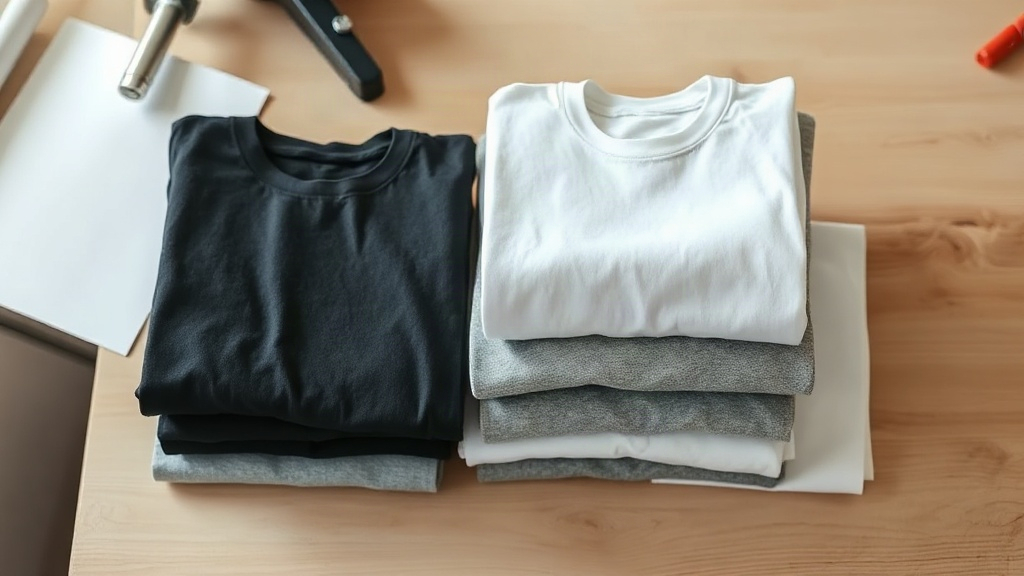
Anyone who has pressed a transfer onto the wrong shirt knows the feeling. The print looks fine for a week, then the fabric relaxes, the ink cracks along the shoulder seam, and a customer sends a photo you would rather not see. Most of the time the transfer was not the problem. The blank was. That is why smart blanks have become the first decision in my workflow rather than an afterthought, and why I now keep a short list of garments I trust before I ever open a design file.
What "Smart Blanks" Actually Means in Practice
The phrase gets thrown around loosely, so it helps to be concrete. A smart blank is not simply a cheap tee. It is a garment whose fiber content, weight, knit, and finish all work with your decoration method instead of fighting it. If you print plastisol, you want a surface that holds a plastisol ink film. If you press DTF transfers, you want a fabric that lets the adhesive powder flow into the weave and lock in place.
Three variables carry most of the weight:
- Fiber content. 100% cotton takes heat well and gives a soft, matte hand. Cotton and polyester blends hold color better and resist shrinking, but they can scorch if you push the temperature too high.
- Fabric weight. Lightweight 4.0 to 4.5 oz shirts feel great in summer but can show the outline of a transfer on dark colors. Midweight 5.3 to 6.1 oz is the sweet spot for retail-feeling custom work.
- Knit and surface. A tight, combed ring-spun face accepts adhesive more evenly than a loose open-end knit, which is why two shirts at the same weight can behave completely differently under the same press.
None of this is exotic knowledge, but it is the difference between a run of shirts that sells and a run that generates refund requests.
Why Shaka Wear Keeps Showing Up in My Test Orders
I started buying Shaka Wear because of the cut. The brand is built around a boxy, streetwear-leaning silhouette that sits differently than the standard retail tee, and that shape matters when your customer is a skater, a barber, or anyone selling a look rather than a uniform. The shoulders are wider, the body is shorter and squarer, and the fabric has enough substance that it does not go transparent under a phone flash.
What keeps it in rotation is consistency. In my experience, the heavyweight cotton styles press flat without the puckering you get on thinner knits, and the color depth on the darker shades holds up after repeated washing. For anyone building a small brand, that predictability is worth more than a few cents saved per unit.
Where Shaka Wear Fits Best
It is not the right blank for every job. If you are printing corporate polos or need a slim tailored fit, look elsewhere. But for oversized graphics, full-front prints, and anything where the garment itself is part of the design statement, the heavier hand of a Shaka Wear tee does a lot of the work for you.
What to Watch For
Heavyweight cotton shrinks. Pre-shrink your blanks or order one size up if your customer is between sizes, and always wash-test a sample before you commit to a fifty-piece run. I also recommend pressing a test transfer on the exact color you plan to sell, because the same fabric in white and in charcoal can behave differently under heat.
Matching DTF Transfers to the Right Blank
DTF has changed the economics of small-batch custom apparel. You no longer need a screen setup to run twelve shirts in twelve colors, and the print quality on fine detail is genuinely impressive. But DTF is not magic, and the blank still determines the outcome.
Here is the sequence I follow when pairing DTF transfers with a garment:
- Check the fiber blend. High-cotton garments give the softest finished hand. Poly-rich blends can look slightly glossier after pressing.
- Pre-press the garment. Ten to fifteen seconds removes moisture and relaxes the weave so the adhesive can grip.
- Control pressure evenly. Uneven pressure is the number one cause of partial adhesion, especially near collars and side seams.
- Peel at the right temperature. Follow the film manufacturer's instruction, whether that is hot peel or cold peel, and do not improvise.
- Post-press for durability. A short second press with a cover sheet smooths the print and improves wash resistance.
When these steps line up, a DTF print on a midweight cotton tee can survive dozens of wash cycles without cracking. When they do not, even a premium blank will fail.
Dark Garments Need Extra Attention
On black and navy shirts, the white ink layer does most of the visual work. If the transfer is applied with too little pressure, that layer sits on top of the fabric instead of sinking into it, and the result looks like a sticker. Give dark garments a slightly firmer press and a longer post-press, and the difference is immediately visible.
Light Garments Are More Forgiving, Not Foolproof
White and heather shirts hide adhesion flaws better, but they also show scorch marks. Keep your temperature within the range your transfer supplier specifies and use a Teflon or parchment cover sheet every single time.
Building a Blank Inventory That Works
Most small shops do not need twenty styles. They need three or four they know cold. A practical starter lineup looks like this:
- One midweight 100% cotton tee in white and black for everyday orders.
- One heavyweight boxy tee, such as a Shaka Wear style, for streetwear and statement pieces.
- One cotton-poly blend for customers who want minimal shrinkage and easy care.
- One long-sleeve or hoodie option for seasonal drops.
Once you have pressed the same transfer onto the same blank a dozen times, you stop guessing. You know the exact temperature, the exact dwell time, and how the fabric feels when the adhesive has properly cured. That muscle memory is what separates a shop that ships consistent work from one that reprints half its orders.
Test Before You Scale
Before any large order, press one sample, wash it three times, and look at the edges of the print. If the border is lifting or the color has dulled, adjust your process before you touch the rest of the blanks. Ten minutes of testing saves hours of rework.
Frequently Asked Questions
Are smart blanks worth the extra cost compared to budget tees?
In most cases, yes. A better blank holds its shape, keeps its color, and accepts transfers more reliably, which reduces reprints and returns. If your customer is paying retail prices, the garment quality is part of what they are buying.
Can I use DTF transfers on 100% polyester Shaka Wear styles?
You can, but adjust your temperature downward and test first. Polyester is heat sensitive, so a lower press temperature with a slightly longer dwell usually gives better results than a hot, fast press.
How long do DTF prints last on cotton tees?
With correct application and a proper post-press, a well-applied DTF print on cotton typically holds up through many wash cycles. Washing inside out in cold water and avoiding high dryer heat will noticeably extend the life of the print.
Do I need to pre-wash blanks before pressing?
Pre-washing is not always required, but pre-pressing is. A short pre-press removes moisture and relaxes the fabric, which improves adhesion. If shrinkage is a concern for your customer, pre-shrinking the blanks is a smart extra step.
What is the biggest mistake beginners make with custom apparel?
Choosing the blank last. Picking a shirt because it is cheap, then trying to make the decoration work around it, causes most of the problems people blame on the transfer. Start with the garment, then match the print method to it.